Quick Answer
The right boiler for your home mainly depends on its size, the number of bathrooms
you have, and your existing pipework. Combi boilers suit flats and smaller homes, while system or regular
boilers work better for larger homes with higher demand for hot water.
The right boiler type for a home in the UK mainly
relies on its size, layout, and the amount of hot water the household will need. It doesn’t work on assumptions
carried over from a previous property. Choosing incorrectly can lead to poor hot water pressure, higher bills,
or a boiler that works harder than required.
Making the right decision from the start is way
easier than rectifying a mistake later. This is because replacing boilers immediately after installation means
additional cost on top of whatever was spent the first time. That’s the reason why most homeowners choose
to hire central
heating experts in the UK before
making a final decision. Professionals can help with a quick assessment to confirm the right boiler type and
size before money is wasted on the wrong system.
But before getting into the ways to choose a boiler
for different homes, let's explore the types available.
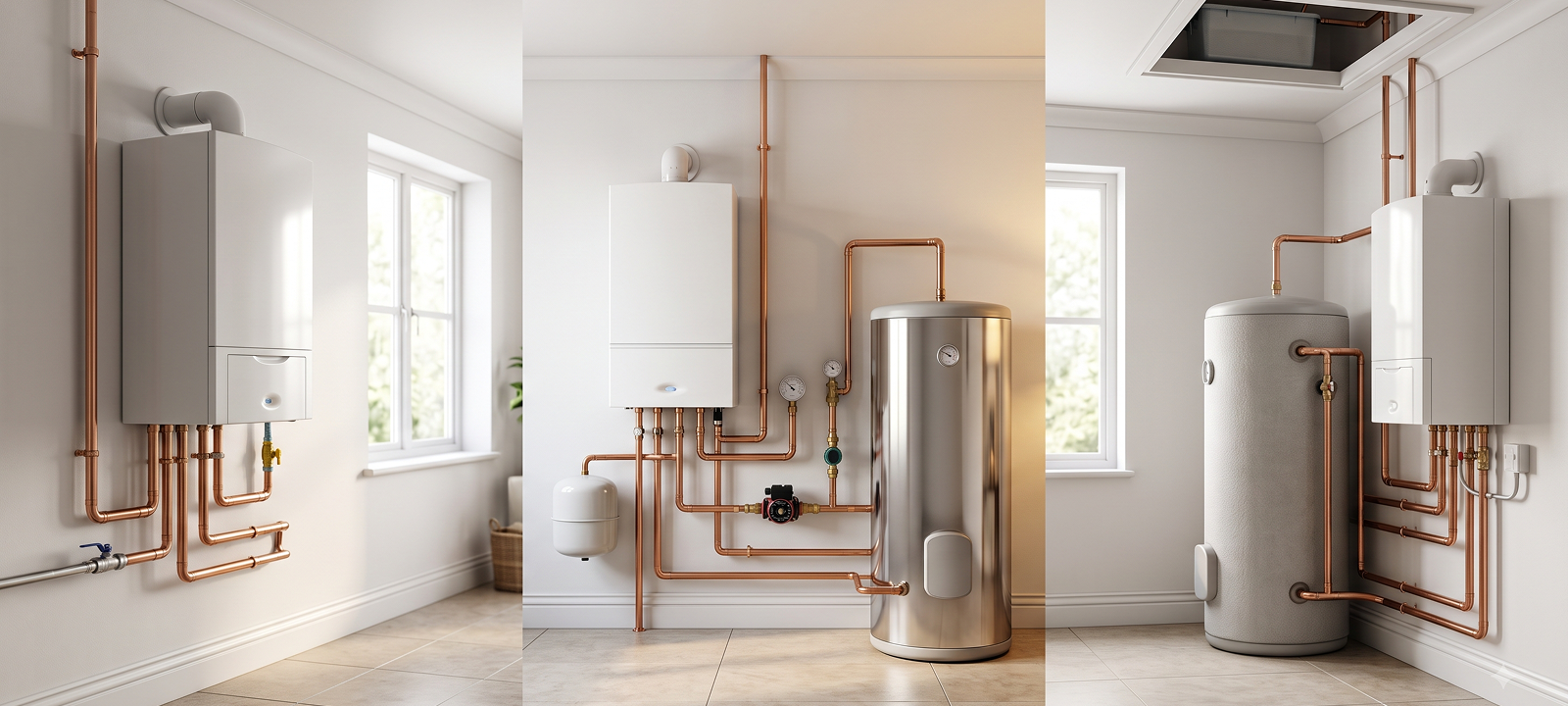
The Three Main Types of Boilers in the UK
Almost every boiler that gets installed in any UK
home falls into one of the following three categories:
| Boiler Type |
How It Works |
Best For |
Hot Water |
| Combi Boiler |
Heats water directly from the mains, no tank needed |
Flats, smaller homes, one bathroom |
Instant, one tap at a time |
| System Boiler |
Uses a hot water cylinder, no cold water tank in the loft |
Homes with 2+ bathrooms |
Stored, multiple taps at once |
| Regular Boiler |
Uses a hot water cylinder and a cold water tank in the loft
|
Older homes, larger properties |
Stored, good for multiple bathrooms |
Combi Boiler
These boilers heat water directly from the mains
whenever a tap is turned on. This helps save space that an otherwise tank or cylinder would take up. This makes
it the simplest and most cost-effective option to install. However, hot water output is limited to one tap at a
time.
System Boiler
A system boiler works from a hot water cylinder. In
this system, hot water is stored for use rather than being heated on demand. That stored supply enables it to
serve two or more bathrooms at once without any pressure drop.
Regular Boiler
Also called a conventional boiler, they use both a
hot water cylinder and a cold water tank in the loft. It's the least compact of the three and fits naturally
into homes that already have this setup. However, most of the work is already handled by the existing tank or
cylinder.
To narrow it down, combi, system, and regular
boilers are the primary types covering the vast majority of properties in the UK. Only a handful of homes use
heat-only systems or renewable alternatives instead.
Irrespective of which category your home falls
into, the easiest way to confirm it is to find a local tradesperson in the UK using online marketplace
platforms. These experts can inspect your existing setup before you plan for a replacement or a full system
overhaul.
Choosing The Right Boiler for Every Kind of UK
Home
Let us now find out the best ways to choose a
boiler based on the type of home you have.
Flats and Small Apartments
Both flats and small apartments rarely have space
for a cylinder or a tank. A single bathroom can keep hot water demand low. Space and ease of use are more
important than maximum performance.
Key Considerations:
● Space limitations for cylinders or tanks
● Single bathroom with lower demand for hot
water
● Compact designs are perfect for smaller
spaces
● Lower installation costs compared to tank-based
systems
Why Expert Advice Matters:
A central heating expert can confirm that a combi
boiler is the right choice. It's also a good idea to check the flow rate since older pipes in some flats may not
provide sufficient pressure.
Terraced and Semi-Detached Homes
Terraced and semi-detached homes are different in
various ways. A single bathroom can suit a combi, while a second bathroom or en-suite may require a completely
new setup.
Key Considerations:
● One bathroom is ideal for a combi
● A second bathroom often works for a system
boiler
● Multiple taps increase pressure needs
● Available loft space for a tank
installation
Why Expert Advice Matters:
For homeowners, it’s important to maintain a home
maintenance checklist with the help of an installer. The checklist should cover pipework and the number of
people who will use hot water at once. This usually helps in deciding whether a combi still makes sense or a
system boiler is worth the switch.
Larger Detached Homes with Multiple
Bathrooms
Detached homes with two or more bathrooms place
more pressure on hot water delivery. The pressure increases for the system when multiple taps are used at once.
Stored hot water becomes the main priority here.
Key Considerations:
● Regular use of two or more bathrooms
● Multiple showers or taps running at once
● Larger cylinder capacity for peak demand
● More radiators across larger floor plans
Why Expert Advice Matters:
For larger homes, signs of inefficient heating systems often show up, such
as rooms staying cold while
others overheat. Here, a professional inspection can detect issues instead of heading for a direct
replacement.
Older Homes with Traditional Heating
Systems
Properties with an existing cylinder or tank
already have plenty of space to meet the needs of a regular boiler. This makes installations easier and
cost-effective. So, for such properties, switching to a combi is possible, but it’s not a budget-friendly
option.
Key Considerations:
● Existing cold water tank in the loft
● Existing hot water cylinder already
installed
● Older pipework may need condition checks
● Full system change adds high cost
Why Expert Advice Matters:
A central heating expert can easily flag signs that
your heating system needs an upgrade beyond the boiler itself.
Signs such as ageing
pipework or an undersized cylinder will help the professionals recommend whether you need the same or a
different type of boiler system.
New Build Homes
New builds are typically well-insulated, compact,
and fitted with modern pipework from the start. This can help remove most of the limitations that older
properties face. Combi boilers are a default choice here.
Key Considerations:
● Compact, well-insulated construction as
standard
● Modern pipework designed for combi systems
● Lower heat loss reduces required output
● Developers install combi boilers by
default
Why Expert Advice Matters:
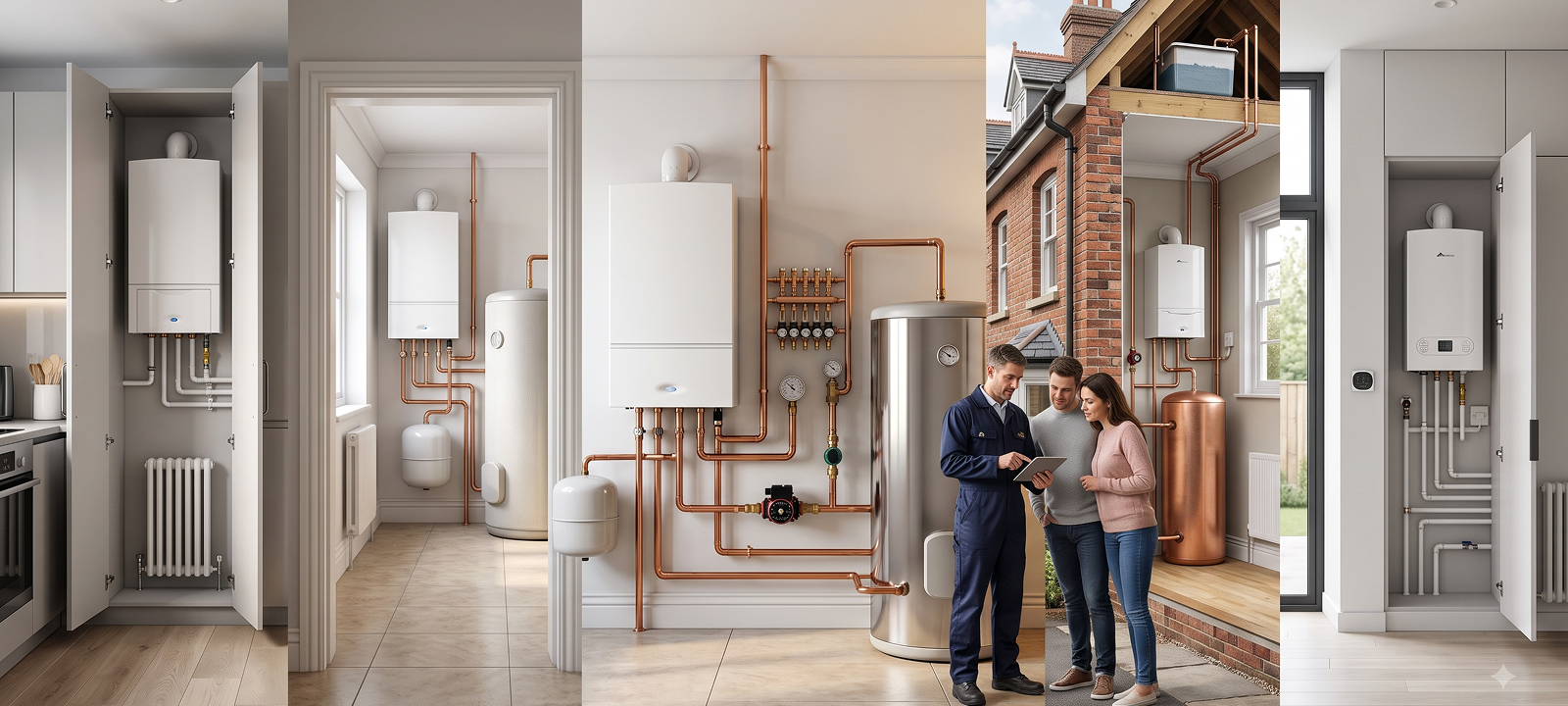
Professionals can help you decide on the right
boiler and how they can fit combi systems into compact new-build utility cupboards. This is worth mentioning
when booking a professional or an assessment in the UK.
How to Size a Boiler Correctly
Even the right type of boiler can underperform if
it’s too small for the home or waste energy if it’s oversized. Output is typically measured in kilowatts (kW),
and generally the range looks like this:
Typical Boiler Output by Home Size
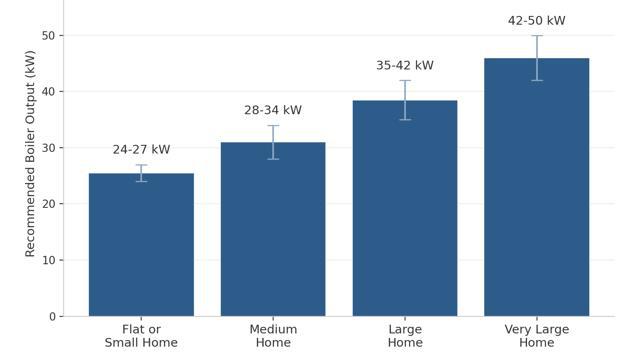
*Source:Energy
Saving Trust boiler ranges
reflecting UK installer sizing practice.
These ranges reflect the importance of matching
boiler output to home size. However, a qualified installer will always calculate the exact figure based on your
property type.
How BuilderWing Takes the Guesswork Out of Boiler
Installation
Choosing a boiler type is only half the work done.
Finding the right installer who can size and install it appropriately matters the most. To find a professional,
you need not knock on doors or scrub through directories, as online marketplace platforms such as BuilderWing
have made choosing one easier for homeowners.
At BuilderWing, we help connect homeowners with
local central heating experts in the UK, alongside other tradespeople such as plumbers, electricians,
builders, tilers, loft conversion
experts, and more.
Here’s how our platform can help:
● Compare quotes from multiple central heating
experts
● Check reviews and earlier relevant work
● Get upfront pricing without any booking
obligations
● Ask installers about boiler size and type
● Access tradesmen across different trades besides
heating
Ready to get quotes from trusted heating
engineers? Post a
project today and start comparing
offers near you.
Final Thoughts
The right boiler is rarely just the one that's due
for replacement. It's the one matched to how your household actually lives, from hot water habits to the
pipework already in the walls. A flat and a large family home on the same street can need completely different
systems, which is why guessing based on habit so often leads to the wrong choice. Getting that match right from
the start saves the cost of correcting it later.
Frequently Asked Questions
Can I install a bigger boiler than I need for
extra hot water?
Oversizing a boiler wastes energy and money without
improving hot water supply. A correctly sized boiler runs efficiently and almost always performs better than an
oversized one.
Do I need planning permission to change my boiler
type?
Most boiler replacements don't need planning
permission, though installation must meet building regulations and be certified by a Gas Safe registered
engineer.
How long does a typical boiler installation
take?
A straightforward like-for-like replacement usually
takes a day. Switching boiler types can take two to three days depending on the pipework involved.