Applying a fresh coat of paint can completely transform a room. However, rushing into this decision without proper preparation almost always leads to patchy walls, peeling, and wasted money. The key difference between a long-lasting paint job and one that starts to flake within months comes down to how you prepare before picking up a brush.
A lot of hard work, preparation, and time go into painting a home. This is something that most homeowners fail to realise. Most homeowners prefer to hand the job over to a reliable professional rather than tackle it themselves. This is where online marketplace platforms streamline the process of connecting with trusted local painters in the UK. Hiring through these platforms offers you peace of mind and quality results.
Complete Home Painting Checklist for Homeowners
Each step outlined below will ensure your walls are fully prepared before the first coat goes on.
Assess Your Walls First
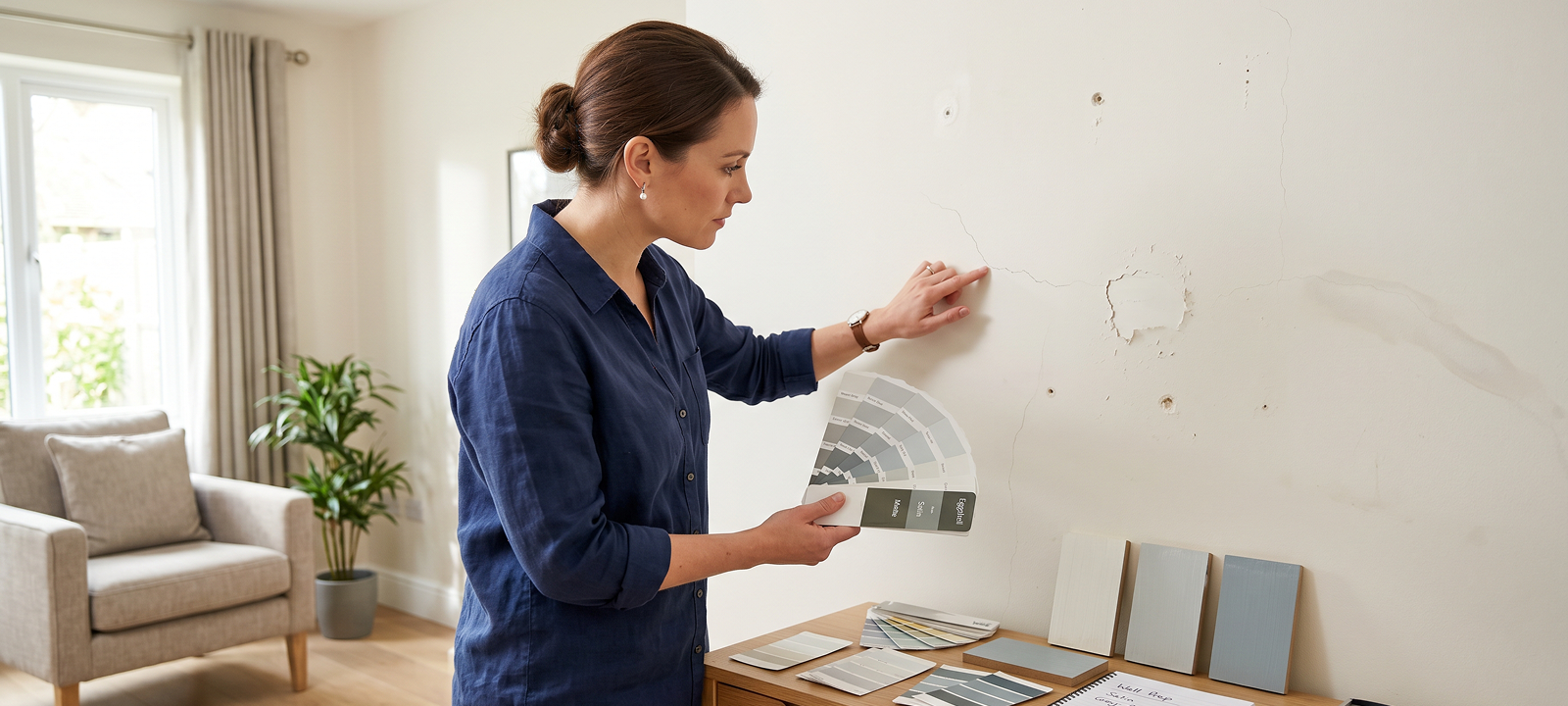
Before you decide to paint your home, ensure you assess the walls in bright light. This will help you identify the issues earlier, saving time. Furthermore, this also helps to avoid common home repair mistakes, such as painting over damp walls or leaving unfilled cracks that reappear weeks later.
What to look for:
● Any hairline splits or cracks
● Presence of water marks or damp stains
● Bubbling or flaking old paint
● Patches of mould or mildew
Pro Tip: Mould should always be treated with a professional solution first. Painting over it will not fix it entirely, and the problem recurs.
Choose Your Paint and Finish
It is important to select the right type of paint and finish. The choice you make significantly influences the appearance, durability, and maintenance requirements. Every room has different levels of damage, moisture, and cleaning requirements. This necessitates the importance of choosing the right products as part of your preparation.
Paint Selection Basics
● Interior paint only
● Exterior paint separately
● Water-based paint options
● Oil-based trim finishes
Calculate How Much Paint You Need
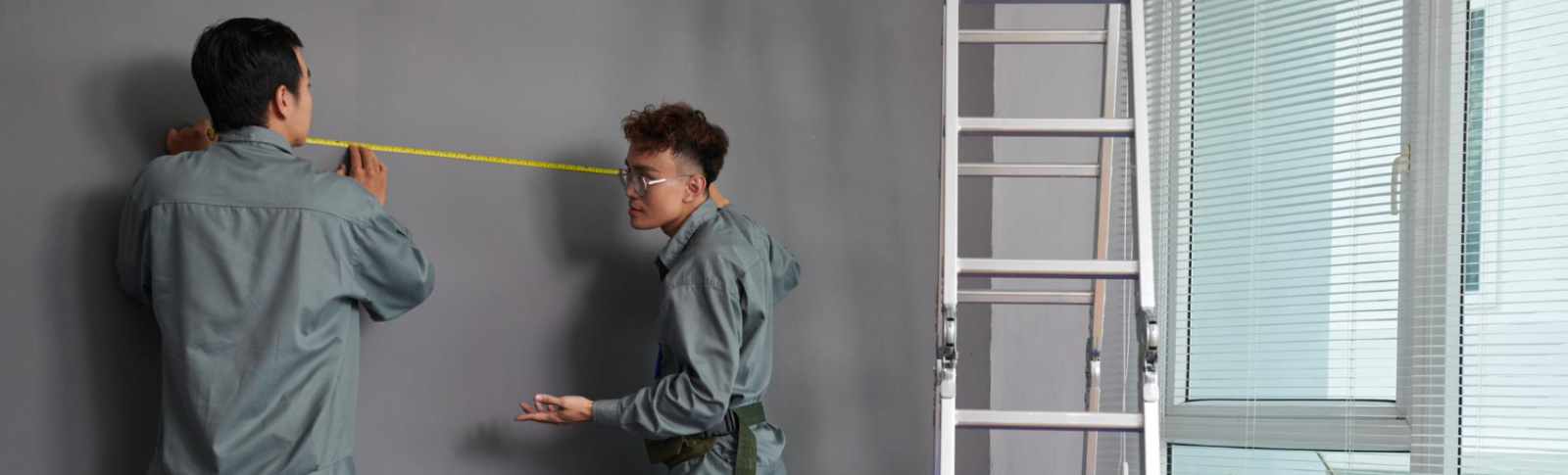
Staying prepared with accurate measurements and material estimation can help avoid unnecessary spending and reduce delays caused by falling short of paint. So, ensure you buy a slightly larger amount of paint to cover touch-ups and future repairs with the matching colour.
Gather Your Tools and Materials
Running out of painter’s tape or finding out that you have the wrong roller nap is a waste of time. So, ensure you complete a full supply check before getting started on a paint job. Staying prepared with everything before starting can prevent mid-job interruptions that break the flow and compromise finish quality.
Must-have tools:
● Rollers, angled brushes, and paint trays
● Painter's tape and canvas drop cloths
● Sandpaper (120-grit and 220-grit)
● Putty knife and spackling compound
● Tack cloth for dust removal
Pro Tip: Primer is important on new plaster, repaired surfaces, and when making a huge colour change. Bonding and stain-blocking primer serve different purposes. This is the reason why most homeowners choose professionals to do the job. One of the main benefits of hiring professional painters is that they will handle all the preparation steps and ensure all key requirements are met.
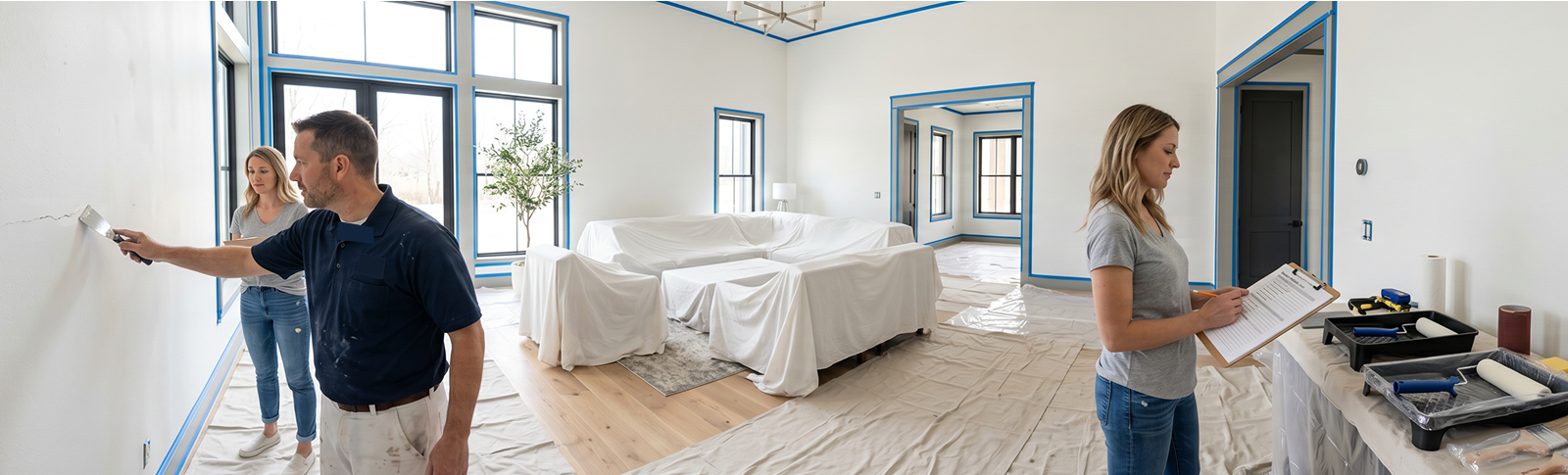
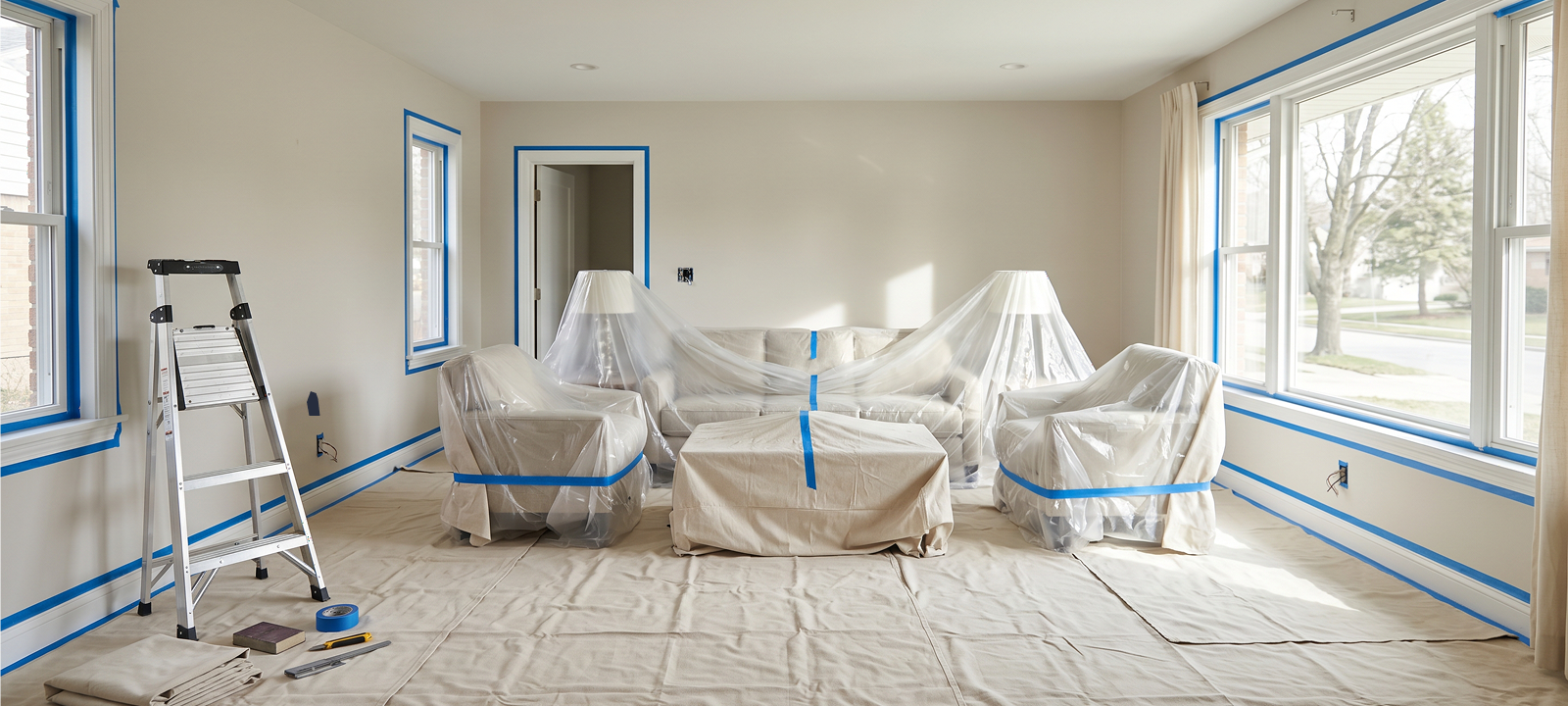
Clear and Protect the Space
Keeping your furniture and floors protected takes under an hour and prevents paint damage that costs a lot to fix. A well-organised space can help you stay aware of your household safety while the project is in progress. So, before moving furniture and exposing valuables, ensure to review your home security checklist to ensure doors, windows, and other entry points remain secure throughout the project.
Simple steps to follow:
● Shift all your furniture away from the walls to the centre
● Remove switch plates and curtain rods
● Lay canvas drop cloths across the entire floor
● Tape cloths at the skirting line to prevent shifting
Tip: Ensure you cover everything properly, as paint splatter travels further than expected.
Clean Every Surface Thoroughly
No matter how good a paint is, they fail to stick properly to dusty, greasy, or dirty walls. So, it is important to take time to clean the surfaces to enhance coverage, durability, and overall finish quality.
Key areas to clean:
● Kitchen walls (invisible grease builds up fast)
● Areas around light switches (skin oils collect here)
● Bathroom walls (soap residue affects adhesion)
● Skirting boards and trim
Pro Tip: Cleaning walls appropriately is more time-consuming than many homeowners expect.
Do a Final Walkthrough
A final walkthrough ensures that all your preparation steps are complete before painting begins. This helps avoid mistakes that compromise the final finish quality. And for those planning larger renovation projects, they often find reliable tradespeople in the UK through online marketplaces such as BuilderWing to handle preparation and painting.
So, before you open the first can of paint, do one last check:
● All furniture has been moved or covered
● Outlets and switch plates removed
● Drop cloths laid and secured
● Holes filled, sanded smooth
● Walls are washed and fully dry
● Primer applied and dry
● Light sanding done, dust removed
● Painter's tape applied and pressed down
Ready to Paint? Start With the Right Help
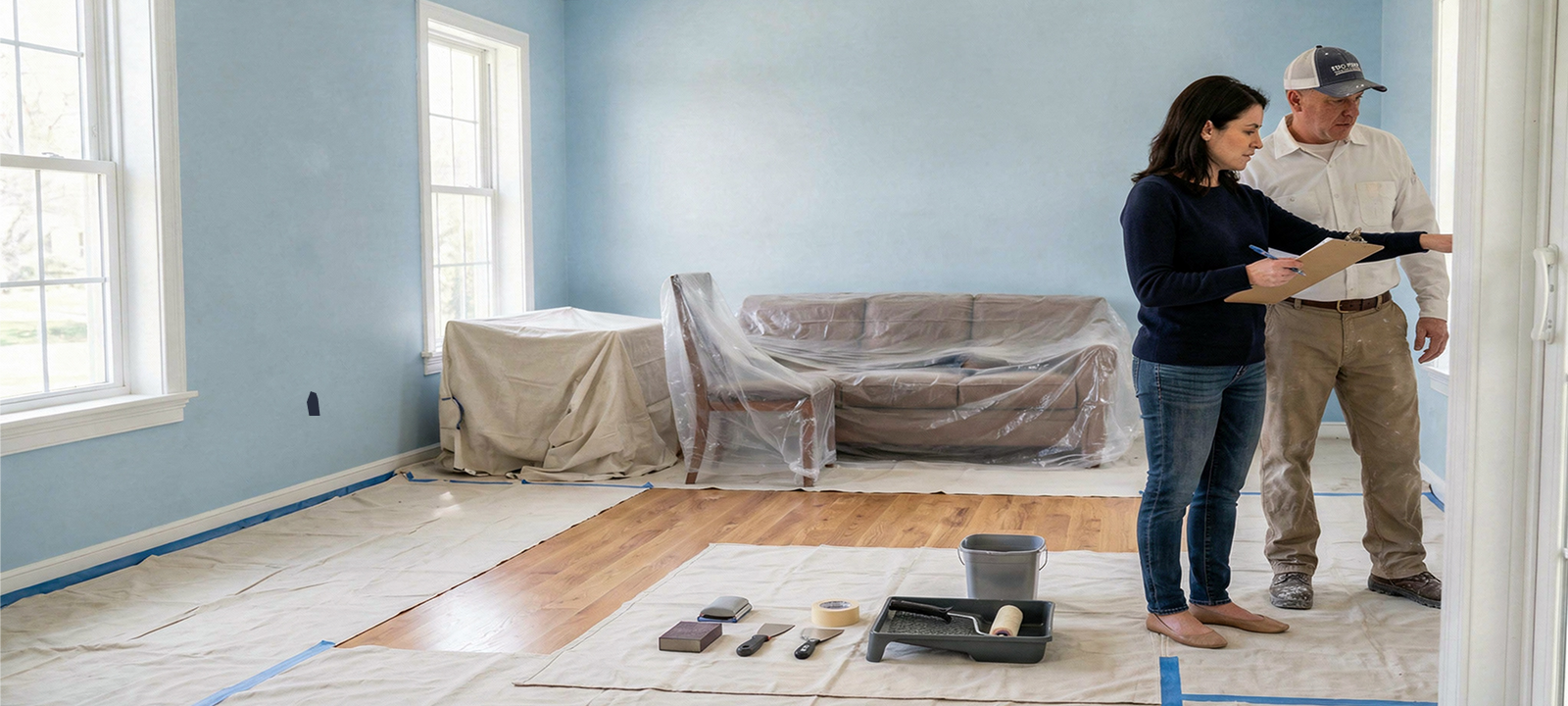
The best painting results don’t come from an expensive brand of paint or a professional-grade brush. They come from what happens before you dip that brush, and that is to prepare yourself with a checklist. However, the best preparation you can do for a big project is to get the right person for the job.
At BuilderWing, we simplify the process for homeowners to find local tradespeople, compare services, and connect with reliable painting professionals for your upcoming project. So, ready to get started? Post a project today to hire the right person for the job!
Frequently Asked Questions
How long should I wait before hanging pictures after painting?
Wait at least 7 days before hanging pictures to allow paint surfaces to cure properly and reduce the risk of marks.
What other tradespeople can I hire besides a painter?
Homeowners often hire plumbers, handymen, plasterers, builders, roofers, electricians, and more for related home improvement projects.
Does painting increase a home's value?
Fresh, professionally finished paintwork improves visual appeal, creates a well-maintained appearance, and can positively influence buyer perception.