Quick Answer
Most UK homeowners can expect to pay between £3,200 and £9,000 for a full house rewire, depending on the property size. In older properties, the cost may range from £7,500 to £12,500 because the wiring may need more work and additional repairs.
Rewiring an older home in the UK often costs more than the same work done on a newer property. The price relies on the condition of the existing wiring, how easily electricians can reach it, and whether walls and floors need repairs after the work. The cost of rewiring similar houses differs by thousands of pounds. So it helps to check exactly what each electrician includes in their quote.
Understanding the factors that determine the final cost can help homeowners set a realistic budget before work starts and compare quotes fairly. Also, it helps when you hire an expert electrician in the UK for a rewire. This makes it easier to check if the electrician will repair any damage, test the wiring, provide a safety certificate, and remove leftover waste after the work is done.
What a Full House Rewire Typically Costs
The cost of rewiring a house in the UK depends mainly on the property size, the age of the existing wiring, and how easily an electrician can access the cables. A complete rewire quote mainly covers materials, labour, and inspections. Wall and floor repairs after the work also add to the final bill.
Let’s check the basic costs for a full rewire based on property type:
| Property type |
Typical full rewire cost |
| 1-bed flat |
£3,200 to £5,500 |
| 2-bed house |
£4,500 to £7,000 |
| 3-bed house |
£6,000 to £9,000 |
| 4-bed house |
£8,500 to £12,000 |
| 5-bed house |
£10,500 to £18,000 |
| Older homes with old cabling |
£7,500 to £12,500 |
Rewiring older homes with rubber- or fabric-covered wiring often costs more, as electricians need more time to replace the cables and complete any required repairs.
How Rewiring Prices Change Across UK Cities
Labour rates differ across the UK, and so do rewiring costs. It can cost a lot more in London than in other major cities, as we can see in the table below:
| Location |
2-bed house |
3-bed house |
4-bed house |
| London |
£5,600 |
£8,100 |
£10,500 |
| Bristol |
£4,500 |
£6,500 |
£8,500 |
| Birmingham |
£4,500 |
£6,500 |
£8,500 |
| Manchester |
£4,500 |
£6,500 |
£8,500 |
| Leeds |
£4,600 |
£6,600 |
£8,700 |
| Glasgow |
£4,500 |
£6,500 |
£8,500 |
The prices for the same house size outside London are almost the same. For instance, older homes across the UK, including Bristol in the South West of England, often have Victorian and Georgian terraces that need full rewires. So homeowners can find electricians in Bristol for an older house to compare local quotes before booking.
Typical Costs for Each Stage of a Rewire
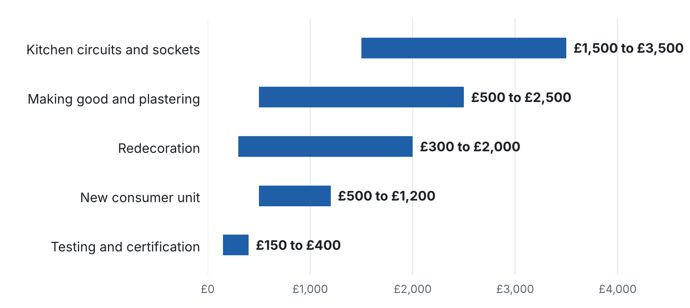
A complete rewire includes several stages, and each costs differently. The chart below will show how much each part of the work can cost.
Typical Cost of Each Stage of a UK House Rewire
New Consumer Unit
Cost: £500 to £1,200
The consumer unit is a home's main fuse box. The cost depends on the number of circuits it controls and whether it uses standard dual RCD protection or individual RCBO protection, which costs more.
A modern unit can protect each circuit better, replacing an old fuse box that may no longer meet current safety standards.
Making Good and Plastering
Cost: £500 to £2,500
Cables are mainly fitted in channels that cut into walls and ceilings. Then it needs filling and plastering too. The cost relies on the number of rooms affected and how hard the surfaces are to repair.
Planning these rewiring tasks with an electrician can save you from repeatedly hiring a plasterer. It also helps the finished wall look smooth and even.
Testing and Certification
Cost: £150 to £400
After the rewiring, the electrician inspects every circuit and provides an Electrical Safety Certificate. The cost can vary based on the property size and the number of circuits tested.
This document shows that the rewiring was fully inspected and signed off, which helps if you plan to sell your house in the future.
Redecoration After the Work
Cost: £300 to £2,000
Redecoration work that includes wallpapering, painting, and flooring repairs is often required once the walls or floors are put back. Costs can increase with the number of rooms and the finish you choose.
Setting aside budget for decorating can avoid a half-finished look and let you use each room again as soon as the job is done. Decorators often quote for multiple rooms at once.
Kitchen Circuits and Sockets
Cost: £1,500 to £3,500
Kitchens require more circuits than most rooms because of ovens, hobs, washing machines, and other large appliances. That’s why they typically cost much more to rewire than bedrooms or halls.
Installing sockets and the right circuits can avoid overloading the electrical system and save you from adding any extension leads later. So, ask for every socket that’s being listed in the quote.
Why Older Properties Cost More to Rewire
Older properties often have walls, cables, or electrical fittings that make a rewire slower and more challenging than in a modern home. Here are a few areas that explain where the additional costs come from and how to prepare for it before any work starts.
Identify the Type of Old Wiring
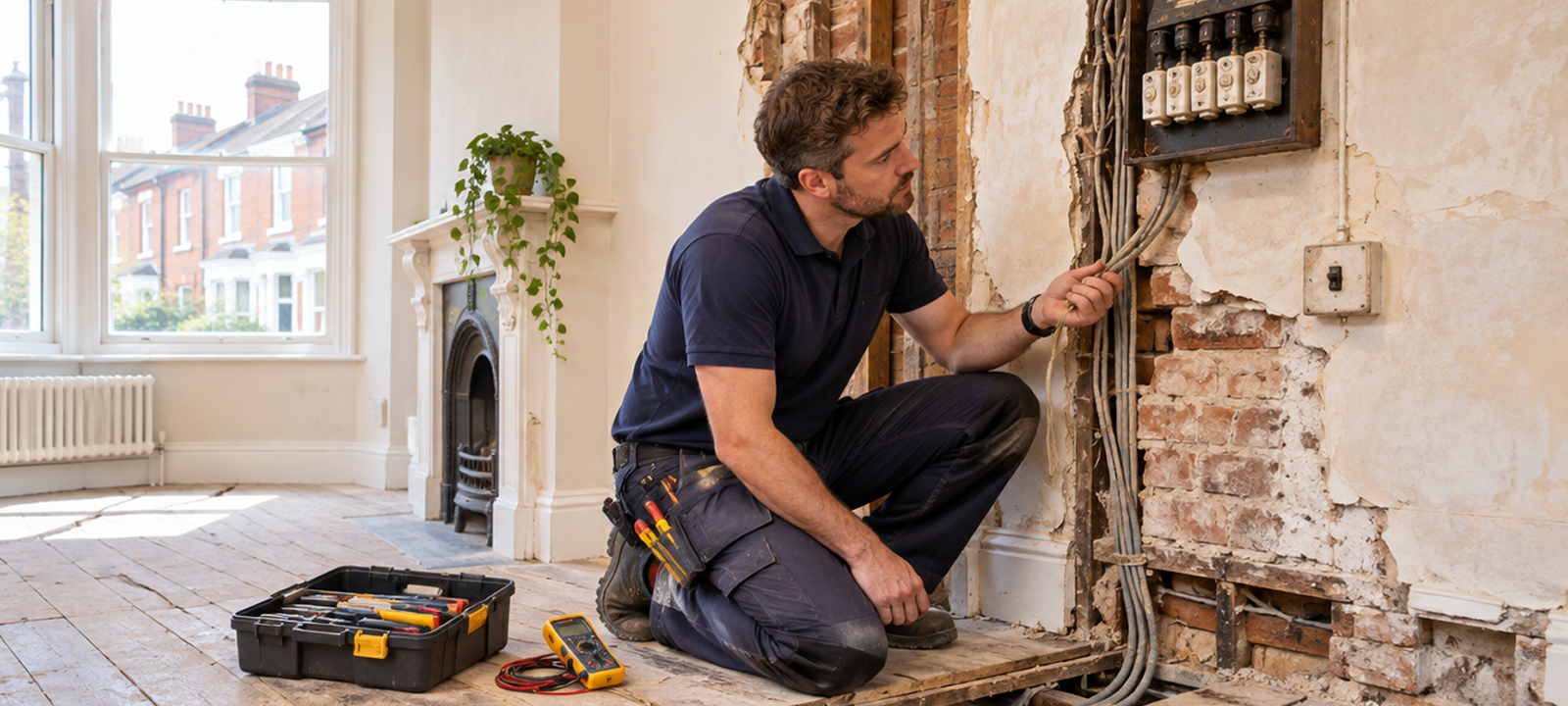
Wiring fitted decades ago is often covered in lead, rubber or fabric instead of modern plastic. This insulation can break down with age, which may mean you need a full rewire instead of a partial one, increasing the cost.
Here’s what you should check:
- Rubber or fabric-covered wires
- Old round pin sockets
- Brittle or cracked insulation
- Fuse boxes with rewireable fuses
A professional electrician can spot the cable type from the fuse box, accessible cabling and sockets. Homeowners can easily find experienced tradespeople in the UK who can inspect older wiring and give written estimates.
Allow for Access and Wall Condition
Electrical wiring is often hard to reach because of thick solid walls, limited loft access and small gaps under the floor. Electricians often spend a lot of time lifting floorboards and cutting channels, and labour is the main factor in determining rewiring costs.
Here’s what you should check:
- Solid stone or brick walls
- Fitted carpets over floorboards
- No loft or floor access
- Plastered ceilings with buried cables
Opening walls and lifting floors exposes old pipework, which an electrician should report immediately. Homeowners should also understand the electrical emergencies to avoid when walls are left open and all circuits or wiring are exposed.
Check Earthing and the Incoming Supply
Older homes might have poor earthing or an incoming electricity supply that cannot handle modern demand. Fixing these adds to the overall price because they affect the safety of the entire installation. That way, electricians will test both before starting the rewiring.
Here’s what you should check:
- Weak or missing earthing
- Unbonded gas and water pipes
- Frequent tripping or blown fuses
- Flickering lights or warm sockets
An electrician often tests the earthing and supply before starting the rewire. Warm sockets, flickering lights, and frequent trips are common electrical warning signs that need fixing right away.
Compare Full and Partial Rewires
A partial rewire replaces only some circuits, so it costs less and is less time-consuming. It’s perfect for homes where part of the wiring was updated earlier. However, the rest of the house will need its old wires replaced.
Here’s what you should check:
- Age of each circuit
- Condition of wires in each room
- Work that can be easily staged
- A written test report by an electrician
After inspecting the circuits, a professional electrician will explain whether a partial rewire is safe. In either case, average electrician costs in the UK can help you judge whether the quote you receive is fair.
Allow for Hidden Problems
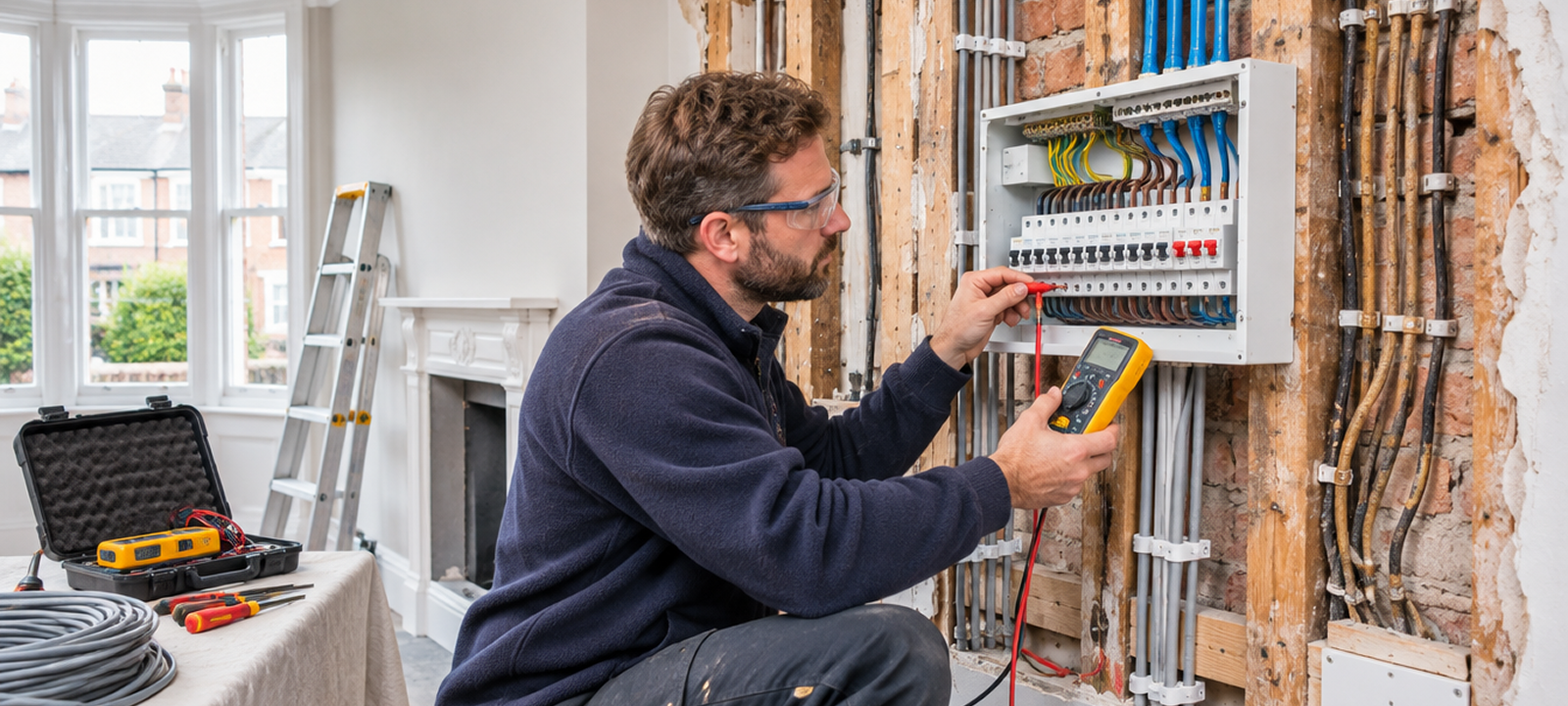
Older homes often hide issues behind walls and ceilings. This includes damaged joists, materials that need special handling, or unsafe changes made in the past. You often only find these once the job starts, so setting aside a small budget is the best decision.
Here’s what you should check:
- Old ceilings made with asbestos
- Unsafe changes made earlier
- Damaged or rotten joists
- Additional work that’s priced in writing
An expert electrician will explain any additional work before starting the rewiring and provide a written estimate. This helps keep the final estimate close to the original quote and prevents hidden surprises later.
Choosing the Right Electrician for Your Home
A rewire goes more smoothly when you choose the right electrician, and BuilderWing helps homeowners do that by letting them post a rewiring job and receive responses from interested local electricians, with each response showing the price and what is included. Post a project today and start comparing quotes for your rewiring job.
Frequently Asked Questions
How Long Does a House Rewire Take?
A full rewire usually takes between three and seven days for an average home. Larger properties and homes with difficult access can often take longer.
Can I Stay in My Home During a Rewire?
Many homeowners stay at home, but the power is switched off during working hours, and rooms are disturbed. Some move out temporarily for larger jobs.
Which Other Tradespeople Can I Hire Besides Electricians?
Carpenters, tilers, kitchen fitters, bathroom fitters, and handyman services can help with floors, fittings, and tidy-up after a rewire, depending on the job.